

Find the best section with the Member Selector
With a database of thousands of sections for some materials, finding the section you’d like can be a bit daunting if you’re not sure what you’re after. Any time you see a member selection, you can either click the name or click on the “Select…” button to see the pop up member selector. The member selector will show a summary of critical checks for the given design so you can see at a glance what the most optimal section should be. The top filters allow you to filter down by category (eg. F17 timbers) as well as dimensions.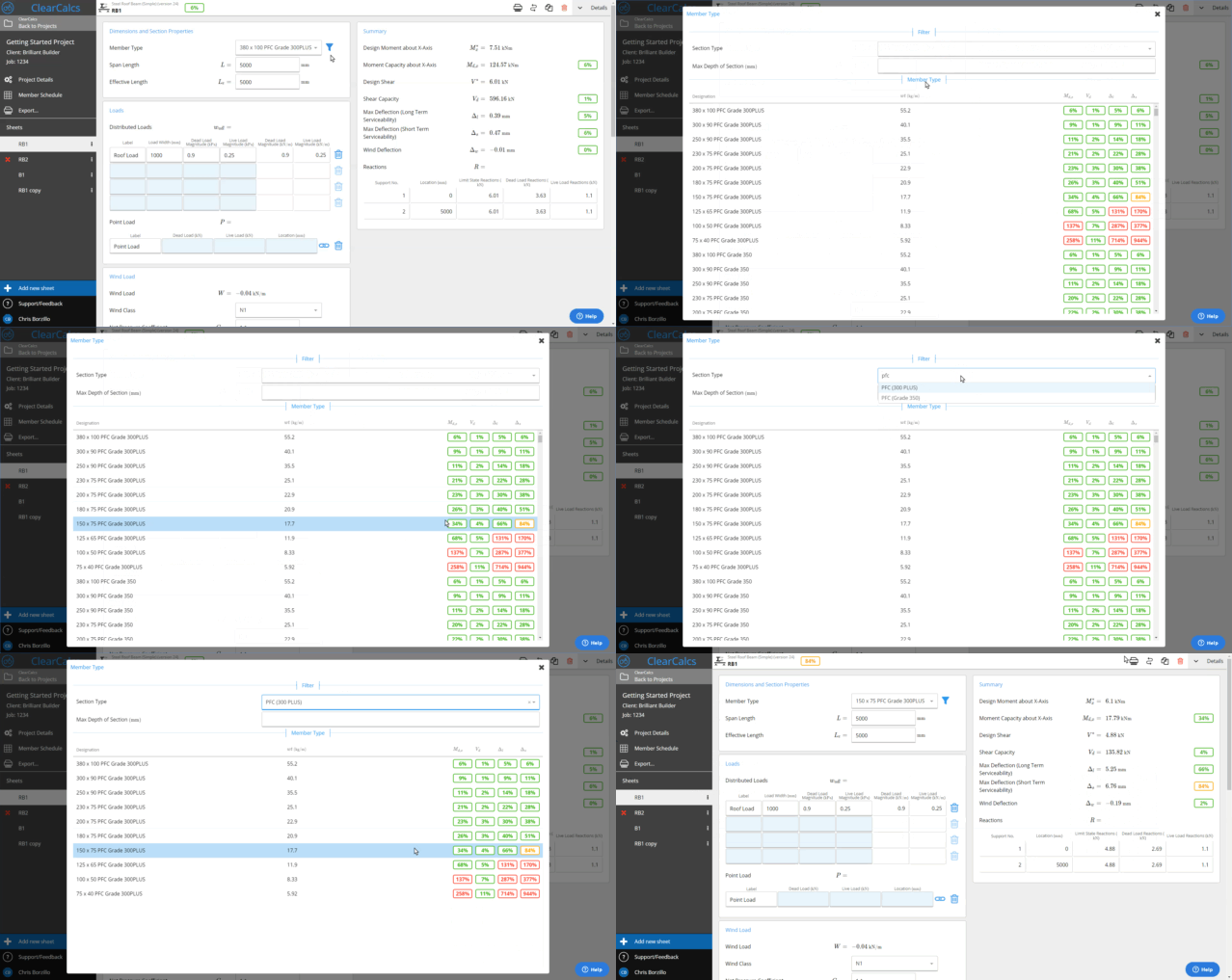
Frequently asked questions
What size beam do I need for a given span and load?
What size beam do I need for a given span and load?
Sizing is a two-step job: get the demands, then check a section against them. The free beam calculator gives you the first step, returning moment, shear, deflection and reactions for the span and loads you enter. Comparing those demands against the capacity of a candidate section is a design check, which needs a free Calcs.com account and the steel, timber or concrete library to AISC, NDS or ACI 318.
Is there a span table for Carter Holt Harvey Woodproducts LVL?
Is there a span table for Carter Holt Harvey Woodproducts LVL?
This page publishes section properties and characteristic values, not allowable spans. A span is not a property of the section: it depends on the loads you apply, the member spacing, and the deflection limit you design to, so the same section spans different distances on different jobs. Rather than reading a span off a generic table, select the Carter Holt Harvey Woodproducts section in a Calcs.com calculator and enter your actual loads. The calculator checks bending, shear, bearing, and deflection and reports the governing limit.
Is there a span table for Dindas Australia LVL?
Is there a span table for Dindas Australia LVL?
This page publishes section properties and characteristic values, not allowable spans. A span is not a property of the section: it depends on the loads you apply, the member spacing, and the deflection limit you design to, so the same section spans different distances on different jobs. Rather than reading a span off a generic table, select the Dindas Australia section in a Calcs.com calculator and enter your actual loads. The calculator checks bending, shear, bearing, and deflection and reports the governing limit.
Is there a span table for Egger OSB?
Is there a span table for Egger OSB?
This page publishes section properties and characteristic values, not allowable spans. A span is not a property of the section: it depends on the loads you apply, the member spacing, and the deflection limit you design to, so the same section spans different distances on different jobs. Rather than reading a span off a generic table, select the Egger section in a Calcs.com calculator and enter your actual loads. The calculator checks bending, shear, bearing, and deflection and reports the governing limit.
Is there a span table for Hyne Timber glulam?
Is there a span table for Hyne Timber glulam?
This page publishes section properties and characteristic values, not allowable spans. A span is not a property of the section: it depends on the loads you apply, the member spacing, and the deflection limit you design to, so the same section spans different distances on different jobs. Rather than reading a span off a generic table, select the Hyne Timber section in a Calcs.com calculator and enter your actual loads. The calculator checks bending, shear, bearing, and deflection and reports the governing limit.
Is there a span table for ITI glulam, I-joist, LVL and sawn timber?
Is there a span table for ITI glulam, I-joist, LVL and sawn timber?
This page publishes section properties and characteristic values, not allowable spans. A span is not a property of the section: it depends on the loads you apply, the member spacing, and the deflection limit you design to, so the same section spans different distances on different jobs. Rather than reading a span off a generic table, select the ITI section in a Calcs.com calculator and enter your actual loads. The calculator checks bending, shear, bearing, and deflection and reports the governing limit.
Is there a span table for Louisiana-Pacific LVL?
Is there a span table for Louisiana-Pacific LVL?
This page publishes section properties and characteristic values, not allowable spans. A span is not a property of the section: it depends on the loads you apply, the member spacing, and the deflection limit you design to, so the same section spans different distances on different jobs. Rather than reading a span off a generic table, select the Louisiana-Pacific section in a Calcs.com calculator and enter your actual loads. The calculator checks bending, shear, bearing, and deflection and reports the governing limit.
Is there a span table for Metsa Wood I-joist and LVL?
Is there a span table for Metsa Wood I-joist and LVL?
This page publishes section properties and characteristic values, not allowable spans. A span is not a property of the section: it depends on the loads you apply, the member spacing, and the deflection limit you design to, so the same section spans different distances on different jobs. Rather than reading a span off a generic table, select the Metsa Wood section in a Calcs.com calculator and enter your actual loads. The calculator checks bending, shear, bearing, and deflection and reports the governing limit.
Is there a span table for Meyer Timber LVL?
Is there a span table for Meyer Timber LVL?
This page publishes section properties and characteristic values, not allowable spans. A span is not a property of the section: it depends on the loads you apply, the member spacing, and the deflection limit you design to, so the same section spans different distances on different jobs. Rather than reading a span off a generic table, select the Meyer Timber section in a Calcs.com calculator and enter your actual loads. The calculator checks bending, shear, bearing, and deflection and reports the governing limit.
Is there a span table for Nelson Pine LVL?
Is there a span table for Nelson Pine LVL?
This page publishes section properties and characteristic values, not allowable spans. A span is not a property of the section: it depends on the loads you apply, the member spacing, and the deflection limit you design to, so the same section spans different distances on different jobs. Rather than reading a span off a generic table, select the Nelson Pine section in a Calcs.com calculator and enter your actual loads. The calculator checks bending, shear, bearing, and deflection and reports the governing limit.
Is there a span table for NeXTimber glulam?
Is there a span table for NeXTimber glulam?
This page publishes section properties and characteristic values, not allowable spans. A span is not a property of the section: it depends on the loads you apply, the member spacing, and the deflection limit you design to, so the same section spans different distances on different jobs. Rather than reading a span off a generic table, select the NeXTimber section in a Calcs.com calculator and enter your actual loads. The calculator checks bending, shear, bearing, and deflection and reports the governing limit.
Is there a span table for Tilling Timber glulam and LVL?
Is there a span table for Tilling Timber glulam and LVL?
This page publishes section properties and characteristic values, not allowable spans. A span is not a property of the section: it depends on the loads you apply, the member spacing, and the deflection limit you design to, so the same section spans different distances on different jobs. Rather than reading a span off a generic table, select the Tilling Timber section in a Calcs.com calculator and enter your actual loads. The calculator checks bending, shear, bearing, and deflection and reports the governing limit.
Is there a span table for Wesbeam LVL?
Is there a span table for Wesbeam LVL?
This page publishes section properties and characteristic values, not allowable spans. A span is not a property of the section: it depends on the loads you apply, the member spacing, and the deflection limit you design to, so the same section spans different distances on different jobs. Rather than reading a span off a generic table, select the Wesbeam section in a Calcs.com calculator and enter your actual loads. The calculator checks bending, shear, bearing, and deflection and reports the governing limit.