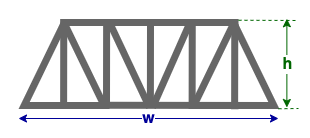
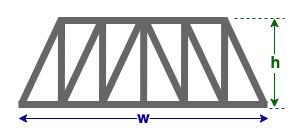
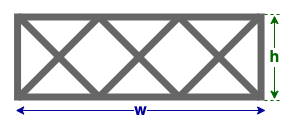
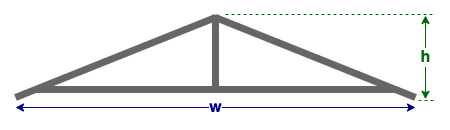
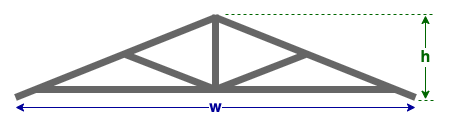
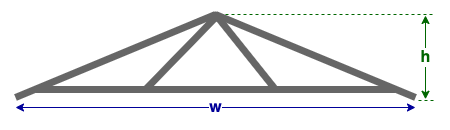
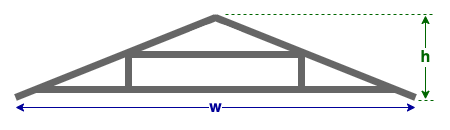
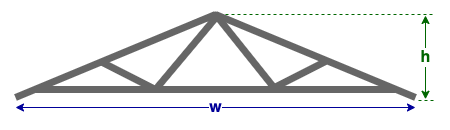
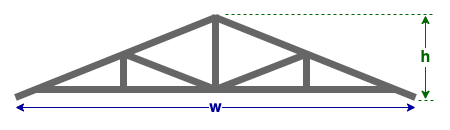
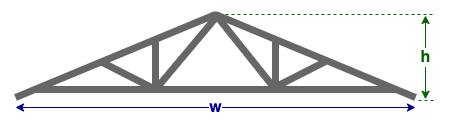
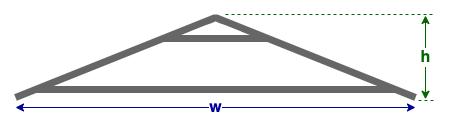
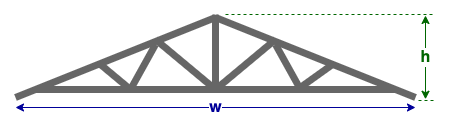
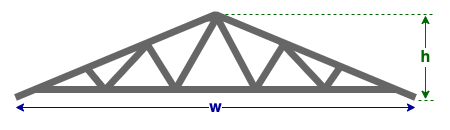
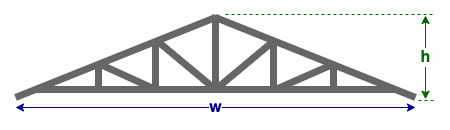
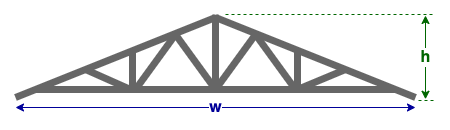
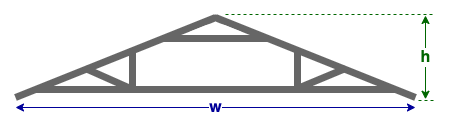
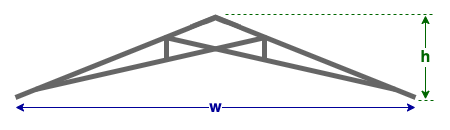
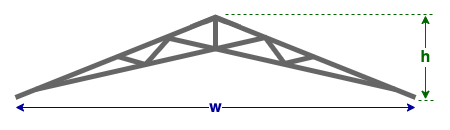
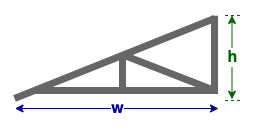
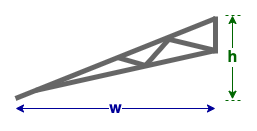
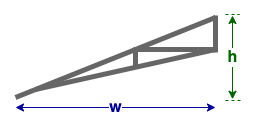
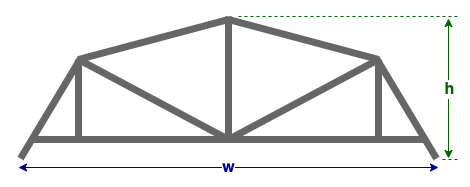
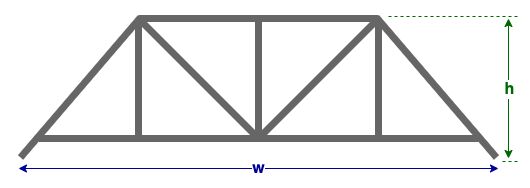
This is a visual guide to all the truss types supported by the Calcs.com Truss Analysis Calculator. In each of the truss diagrams, the total truss height is marked with an β€˜h’ and the total truss width is marked with a β€˜w’.
  1. Flat Trusses
  2. Roof Trusses
  3. Scissors Trusses
  4. Mono Trusses
  5. Other (Gambrel Truss, Hip Truss)

1. Flat Trusses

Flat Warren Truss
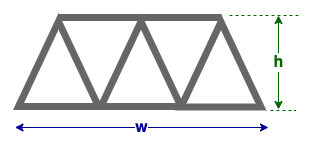
Flat Pratt Truss
Flat Howe Truss
Flat Brown Truss

2. Roof Trusses

King Post Roof Truss
Single Fan Roof Truss
Simple Fink Roof Truss
Queen Post Roof Truss
Fink Roof Truss
Howe Roof Truss
Fan Roof Truss
Roof Tie Truss
Multi-Panel Roof Truss
Double Fink Roof Truss
Double Howe Roof Truss
Triple Fan Roof Truss
Attic Roof Truss

3. Scissors Trusses

Simple Scissors Truss
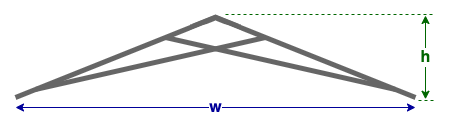
Howe Scissors Truss
Multi-Panel Scissors Truss

4. Mono Trusses

Mono Fink Truss
Mono Howe Truss
Mono Fink Scissors Truss
Mono Howe Scissors Truss

5. Other

Gambrel (Barn) Truss
Simple Hip Truss

Deciding Which Truss to Use

King Post and Queen Post trusses are commonly used in small to medium-sized buildings, while Scissor, Attic, Fink, and Mono trusses are used in larger and more complex buildings and are typically more expensive. Hip, Gable, and Flat trusses are used to meet architectural requirements for the shape of the roof. Additionally, engineers must consider procurement times and ease of installation. Prefabricated trusses are typically better quality (constructed by professionals), cheaper (reduction in onsite labor costs), and easier to install (fewer onsite connections) but procurement times can often be 1-6 months. If the lead times in your area for prefabricated trusses are too long, structural engineers can design trusses to be stick-built on-site. This involves cutting timber and assembling the necessary components on-site, using nail-plated connections. Stick-building trusses can be a time-consuming process, but they can be a cost-effective solution for smaller projects or projects with unique design requirements. You can read more about the advantages and disadvantages to each in our blog post here!