AI workshops

AI workshops for structural engineering firms

Three half-day workshops for the engineers, practice leaders and high-volume teams in your firm. Each one ends with something your team keeps: a prompt sheet, a draft AI policy, or a recurring task rebuilt.

Half-day · 4 to 10 participants · In person or virtual

Enquire about a workshop

Which workshops interest you?*

By submitting this form, you agree that Calcs.com can store and process the information above to set up your account and provide the services you've requested. Privacy policy

AI is already here

Your engineers are probably using AI already. Someone summarizes a code clause in a chat tool. Someone else asks for a beam size and gets a confident number with no working.

Nobody made it firm policy. It just started.

The risk isn't the tool. It's ten engineers using it ten different ways, with no shared way to check the output before someone signs it.

What each workshop covers

Every workshop is a half-day session for 4 to 10 people, in person or virtual, and ends with a working output your team keeps.

[ 01 ]

From search engine to sidekick: getting real value from AI-assisted calc work

Half-day · 4 to 10 participants · In person or virtual

Who it's for

Practicing structural engineers already using AI tools in their calc workflow, or curious to start, who suspect they're only scratching the surface: treating it like a faster way to look things up rather than a tool that can give them a starting point for a whole project.

What we cover

  • The gap between how most people use AI today (quick lookups, summaries) and what it's actually capable of: describing a project in plain language and getting a starting point you can refine, using real project types from the room
  • Prompting for engineering work specifically: how to phrase a request so the tool understands your standards, your defaults, and what "done" looks like for your firm
  • Building a verification habit that's fast, not anxious: how to check AI output efficiently so you're confident in it, without re-deriving everything by hand every time
  • Where current tools fall short (speed, occasional wrong defaults) and how to work around known limitations without losing trust in the parts that genuinely save time
  • A structured way to bring a junior engineer or EIT into the workflow using AI as a guided walkthrough, rather than throwing them in cold

Session outcomes

  • A personal prompting reference sheet built around your own most common calc jobs
  • A verification checklist calibrated to your own risk tolerance and project types
  • A benefit you'll notice immediately: faster project setup and fewer repeated manual entries, without giving up the double-checking you already trust yourself to do
Enquire about this workshop

[ 02 ]

AI adoption without the chaos: a practical rollout for engineering practice leaders

Half-day · 4 to 10 participants · In person or virtual

Who it's for

Principals, practice leaders, and operations managers at engineering firms where individual engineers are already experimenting with AI tools on their own, with no shared standard for what's acceptable, how outputs get reviewed, or where responsibility sits if something goes wrong.

What we cover

  • The real risk in most firms right now isn't AI itself: it's ten engineers doing it ten different ways, with no consistency and no paper trail
  • Where liability and professional exposure actually sit when an AI-assisted output feeds into a design decision, and what documentation protects you
  • What separates a tool built for engineering accountability from general productivity software: the questions worth asking before you let your team rely on one
  • A working session where you draft your own firm framework: what to automate, what needs mandatory review, and what stays off-limits entirely
  • How to roll this out without over-restricting your team and losing ground to firms moving faster: sequencing a low-commitment pilot you can approve directly, rather than waiting on a lengthy internal sign-off process

Session outcomes

  • A draft AI policy covering task categories, review requirements, and documentation standards
  • A vendor evaluation checklist you can apply to any AI tool your firm considers next
  • A policy document ready to bring to your team within two weeks, turning individual experimentation into one firm-wide standard everyone can point to
Enquire about this workshop

[ 03 ]

Automating the repeatable: turning standards-based work into AI-assisted output

Half-day · 4 to 10 participants · In person or virtual

Who it's for

Engineers and practice leads doing high-volume, standards-driven work (utility sizing, load calculations, template-based documentation) where the inputs vary but the governing standards don't, and where the same manual process gets repeated project after project.

What we cover

  • Why standards-based work is the best possible candidate for AI assistance: the rules don't change, only the building parameters do, so the labor is inherently repeatable, not inherently valuable
  • Mapping your own repetitive workflows: identifying which tasks are pure standards-application versus which require genuine engineering judgment, so you know exactly where automation helps and where it shouldn't touch
  • Going from a plan or a set of parameters straight to structured output: extracting what you need and applying your standards automatically instead of manually keying in the same values project after project
  • Keeping quality intact at speed: building automation into your workflow without losing the verification step that makes the output defensible
  • A live exercise reworking one of your own recurring, template-heavy tasks into a faster, AI-assisted version

Session outcomes

  • A short list of your own repeatable tasks ranked by automation potential
  • A working AI-assisted version of one real recurring workflow, built during the session
  • A tangible benefit you can measure: hours reclaimed per week on the specific repetitive tasks you brought into the room, without giving up the standards-checking that protects your sign-off
Enquire about this workshop

AI readiness starts with QA

AI readiness in structural engineering comes down to one question: can you check it?

An AI answer is the newest kind of calculation you didn't build. Every workshop applies the review discipline your firm already uses, so reviewers judge the work instead of rebuilding it.

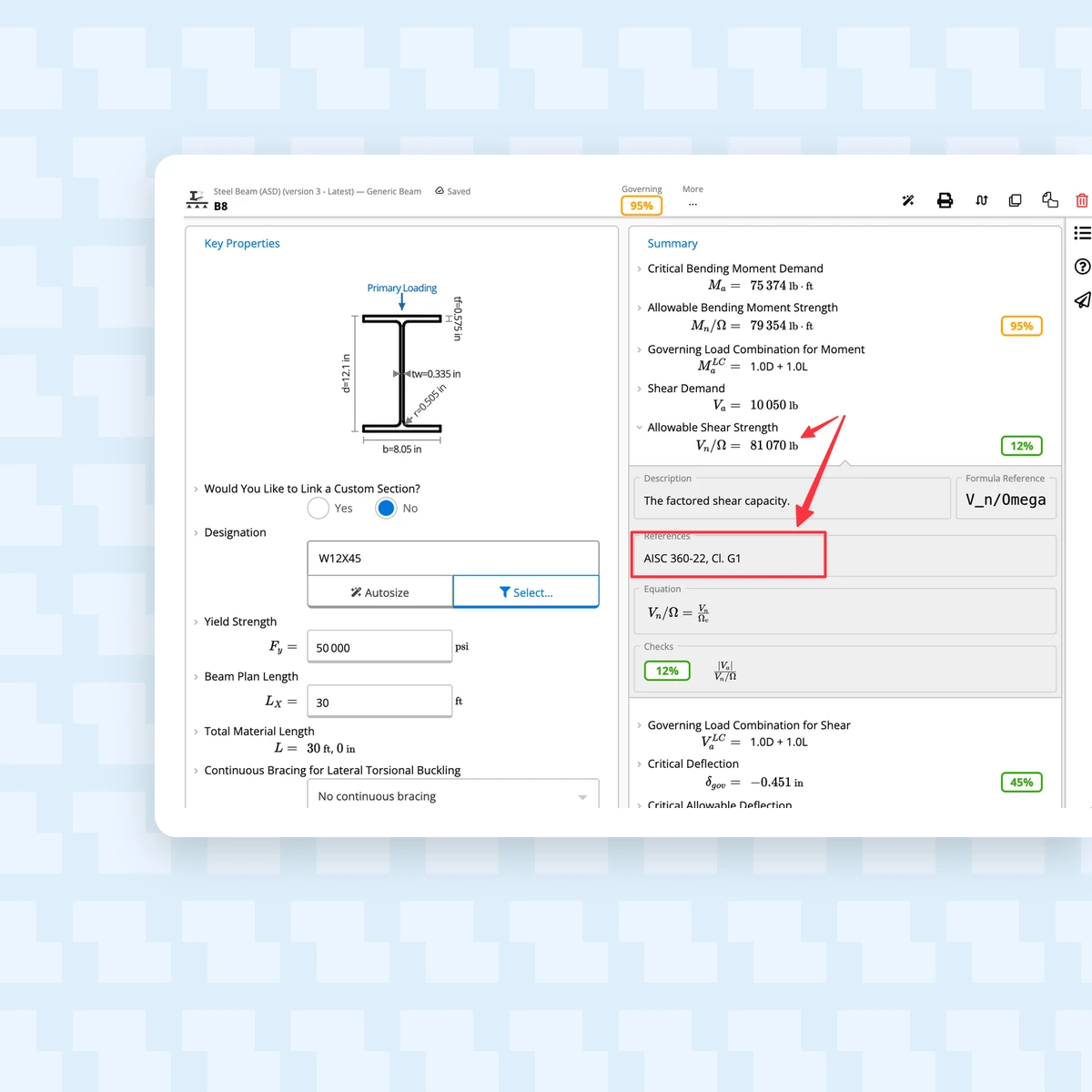
References in Calcs.com showing the formula and AISC clause behind a member check

Why Calcs.com runs these workshops

Chris Borzillo, CEO and co-founder of Calcs.com, runs every workshop. He co-founded Calcs.com in 2016 after watching structural engineers waste hours jumping between different tools just to finish one design.

Three things set these workshops apart from general AI training:

  • We see how structural engineers actually design. Engineers have created more than 13.5 million designs on Calcs.com, so each session starts from real calculation workflows, not a generic AI demo.

  • We build AI that shows its working. CalcsAI never does the math itself. It runs calculators our structural engineers have verified, shows what it checked, and says when it doesn't have an answer.

  • Every check traces back to a clause. Every result in Calcs.com shows its formula, inputs and referenced clause, across 228 calculators built to IBC, AISC, NDS, ACI, AS/NZS, NBCC and Eurocode. That is the review standard the workshops hold AI output to.

Criterium Engineers

75 to 85%of all designs done in Calcs.com.

“The majority of our calculations, unless it's something very odd, are done in Calcs.com.”
Nate PowelsonProject Engineer, Criterium Engineers

Common questions

Bring an AI workshop to your firm

Tell us which workshops fit your team, and we'll reply to plan the session with you.

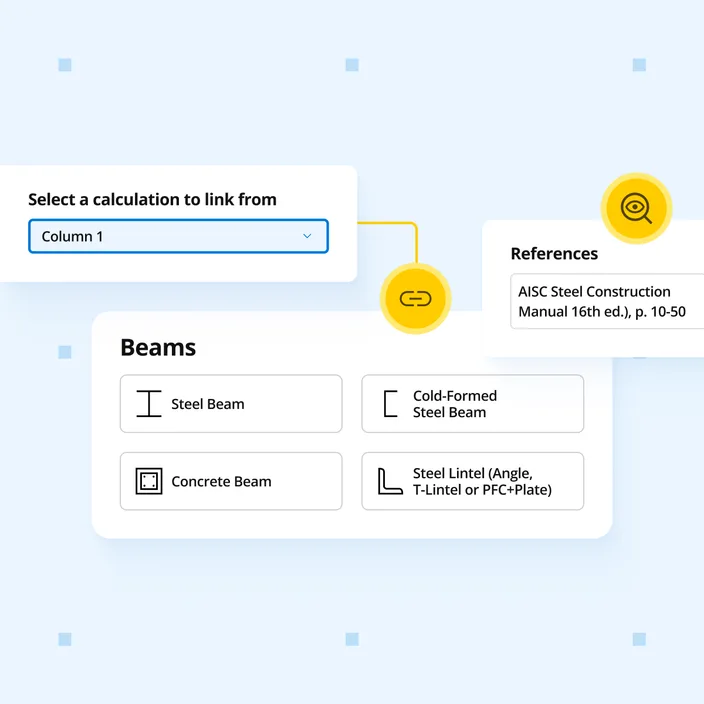
Linking a calculation to a column in Calcs.com, with the AISC Steel Construction Manual reference attached

We use analytics cookies to understand how you use this site and improve our content. See our privacy policy and cookie policy for details.